

Harnessing the Power of Anti-Inflammatory Foods for Fertility & Hormonal Health
What you eat doesn't just nourish your body — it communicates directly with your hormones, your cycle, and your capacity to conceive. Chronic inflammation is one of the most underrecognized barriers to fertility, quietly disrupting ovulation, implantation, and hormonal balance. The good news? Nature has given us an extraordinary pharmacy in the form of food.
A diet rich in anti-inflammatory foods can help regulate hormones, improve egg quality, support a healthy uterine environment, and create the internal conditions your body needs to thrive — whether you're actively trying to conceive, supporting your postpartum recovery, or simply tending to your long-term reproductive health.
-
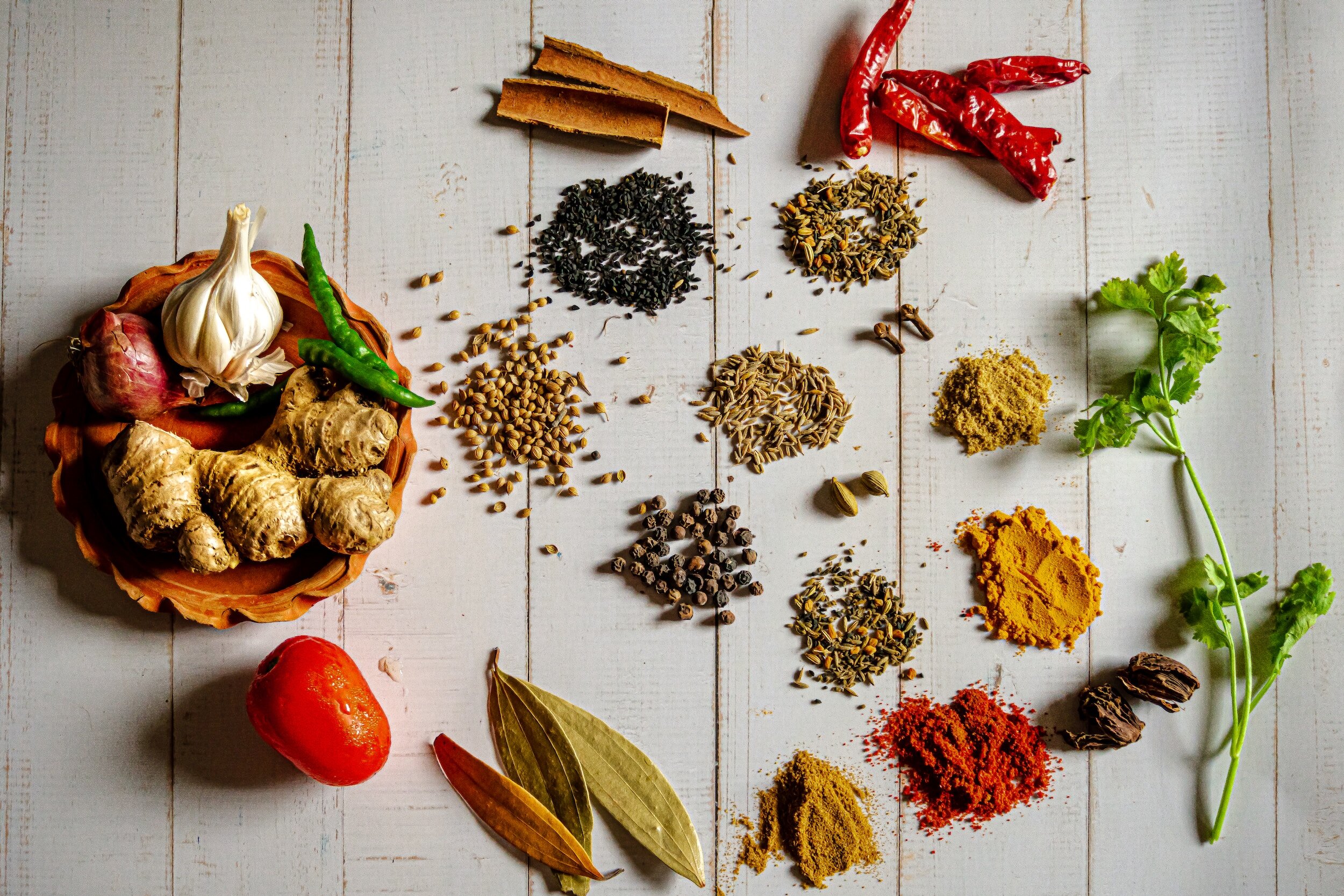
Curcumin, the active compound in turmeric, has strong anti-inflammatory and antioxidant properties. It has been used for centuries in traditional medicine to treat various inflammatory conditions.
-
Ginger contains gingerol, a bioactive compound with anti-inflammatory effects. It can help reduce muscle soreness, joint pain, and other inflammatory symptoms.
-
Green tea is rich in polyphenols, which have been shown to have anti-inflammatory and antioxidant benefits.
-
Spices such as garlic and cinnamon contain compounds that have anti-inflammatory effects and can contribute to a healthier diet.
-
Dark chocolate with a high cocoa content contains flavonoids that may have anti-inflammatory benefits when consumed in moderation.
-
Fatty fish like salmon, mackerel, sardines, and trout are high in omega-3 fatty acids, which have potent anti-inflammatory effects. Omega-3s help reduce the production of inflammatory molecules in the body.
Drink
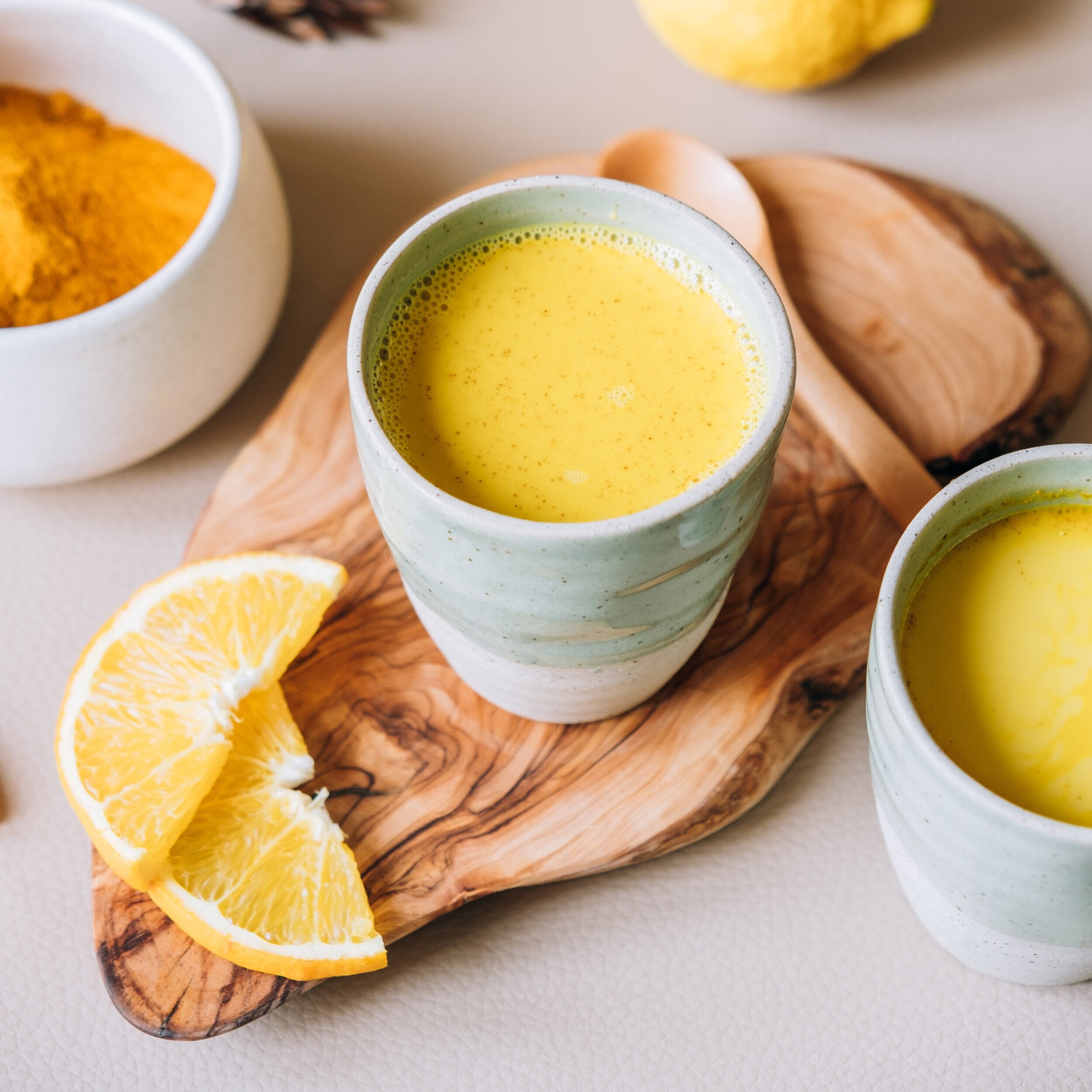
Golden milk
Golden milk isn't just a warming ritual — it's a deeply nourishing tonic for your reproductive system. Curcumin, the active compound in turmeric, has been shown to reduce systemic inflammation, which plays a direct role in conditions like endometriosis, PCOS, and unexplained infertility. Its antioxidant properties also help protect eggs from oxidative damage — a critical factor in both egg quality and embryo development. Sip it as an evening ritual to also support cortisol balance before sleep, when your body does much of its hormonal repair work.

Lunch
Spinach and persimmon salad
This salad is a fertility powerhouse hiding in plain sight.
Spinach delivers folate — one of the most essential nutrients for conception and early pregnancy — alongside vitamins A and K, which regulate immune responses and reduce inflammation in the reproductive tissues.
Walnuts are one of the richest plant sources of omega-3 fatty acids, which support healthy hormone production, improve blood flow to the uterus, and have been linked to better embryo quality in research on fertility nutrition.
Feta Cheese contributes beneficial bacteria that support a healthy gut microbiome — increasingly recognized as a key player in estrogen metabolism and hormonal balance.
Pomegranate Seeds are rich in punicalagins and anthocyanins — antioxidants that protect reproductive cells from oxidative stress and have been studied for their role in supporting uterine lining thickness and blood flow.
Persimmon offers vitamin C and vitamin E, both of which support progesterone production, protect against oxidative damage to eggs, and aid in the tissue repair needed for a healthy endometrium.
Dinner
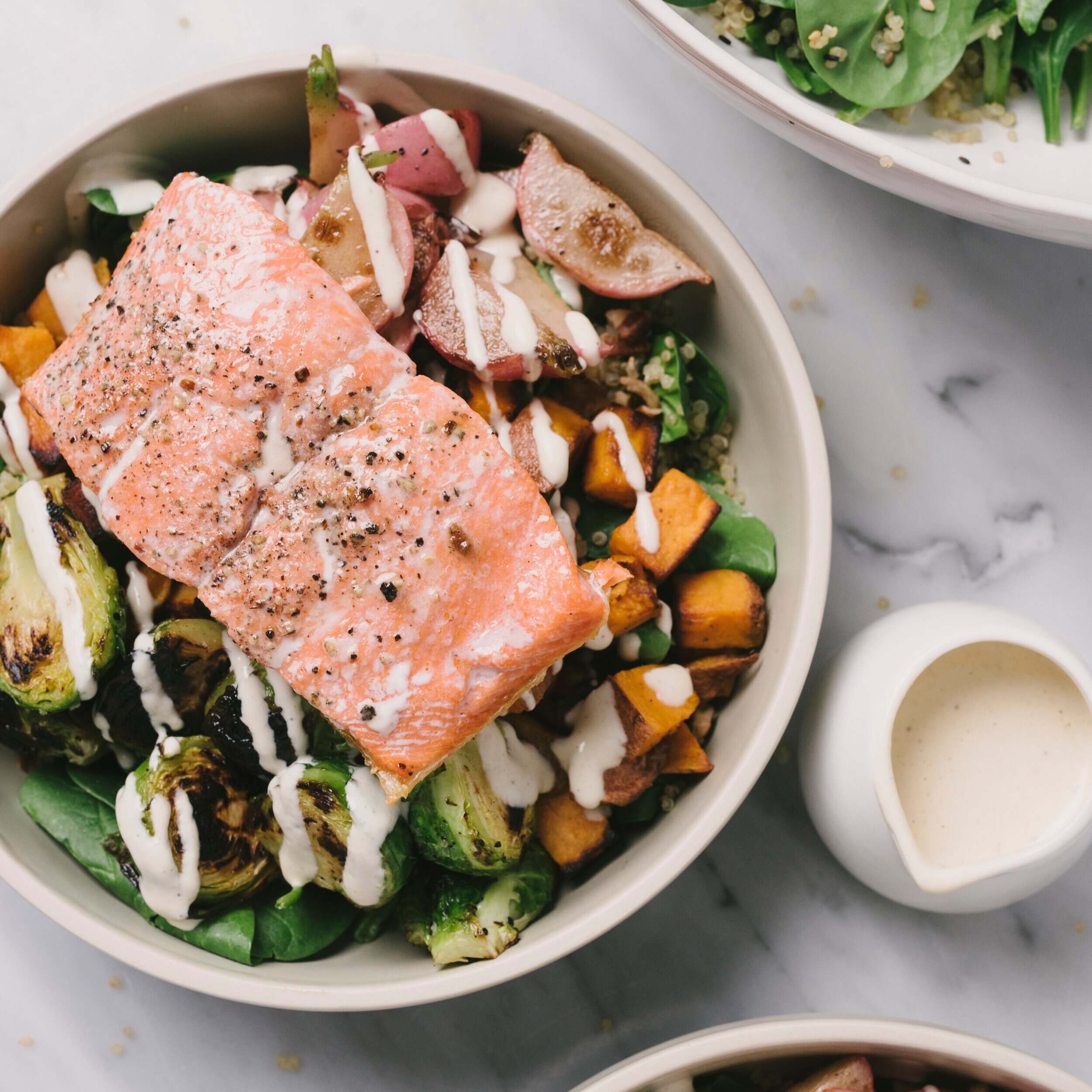
Salmon and sweet potato salad
If there's one meal to eat regularly when supporting your fertility, this is it.
Salmon is one of the most fertility-supportive foods in existence. Its EPA and DHA omega-3 fatty acids reduce inflammatory markers that interfere with ovulation, support healthy hormone signaling, and are essential for fetal brain development in early pregnancy.
Sweet Potatoes are rich in beta-carotene, which converts to vitamin A — a nutrient that regulates reproductive hormones and supports the health of the uterine lining. Their fiber content also supports estrogen clearance through the gut, helping to prevent the hormonal imbalances associated with estrogen dominance.
Leafy Greens (spinach or kale) bring magnesium, vitamin K, and quercetin — nutrients that work together to lower inflammation and support the adrenal-ovarian axis, which governs your stress response and its impact on your cycle.
Extra Virgin Olive Oil provides monounsaturated fats and polyphenols that lower inflammatory markers, support cervical mucus quality, and have been shown in research to improve outcomes in IVF cycles.
Turmeric & Ginger amplify all of the above. Curcumin modulates the inflammatory pathways most disruptive to fertility, while ginger supports circulation to the reproductive organs and helps reduce prostaglandins that cause painful periods.